Vaughan Water Meter Upgrades: What Homeowners and Builders Need to Know
A Vaughan water meter upgrade usually involves two connected parts: the City’s residential meter application and any private plumbing work needed to make the installation area ready. The owner or contractor applies, provides the required flow information and site-servicing documents, waits for the City’s approval, pays the approved charge and then contacts the City to schedule installation. The builder or owner must also provide access and have the necessary plumbing and meter space completed on the appointment date.
The City lists residential water-meter requests for renovations, new service connections, new construction and certain shared-service upgrades. Before making arrangements, review the City’s current Vaughan water-meter requirements and confirm which parts of the work belong to the municipality, the owner or the plumbing contractor.
When is a Vaughan water meter application needed?
A residential application may be required for:
- A renovation that changes the water-service arrangement
- A new service connection
- New construction
- A shared-service upgrade, such as consolidating a “Y” connection serving two properties into one connection
A project may also involve private-side work around an existing meter, such as replacing shutoff valves, rebuilding a short section of piping or creating adequate access. Those plumbing repairs are separate from the City’s application decision. Ask for a written scope that identifies whether the work is a new municipal meter request, a replacement or exchange, a service upgrade, private plumbing repair, or a combination.
Who can apply?
The City’s residential procedure says the property owner or contractor can make the request. A contractor must notify the property owner first and provide complete company and project details.
Gather the following before starting:
- Property address and owner information
- Project type and reason for the request
- City-approved site-servicing drawings, where required
- Mandatory minimum and maximum flow rates
- Proposed meter or service information, if already specified by the project
- Contact information for the person coordinating access and scheduling
For a custom home or major renovation, coordinate the meter location with the mechanical-room layout, finished-wall access and construction schedule. A meter appointment should not be treated as a final-day closeout task.
How the residential Vaughan process works
1. Submit the application and wait for approval
Applications, payments and submission of City-approved site-servicing drawings can be completed online through the City’s process. The applicant must provide the mandatory minimum and maximum flow rates. After submission, the City sends an approval-status notification by email. Full payment is due after the application is approved, not simply because a request has been started. The City’s residential water-meter procedure PDF contains the current application sequence.
Do not choose a larger or smaller meter solely because it is common on another property. The City says it reviews applications using the flow information provided and may communicate the applicable meter type. Confirm the approved meter and the associated plumbing arrangement before rough-in work is closed in.
2. Pay the approved charge
Once the application is approved, the applicant completes payment using the City’s accepted process. Meter charges and product selections can change, so check the live City page rather than relying on an old quote, screenshot or previous project.
3. Contact the City to schedule installation
The applicant is responsible for contacting watermeter.services@vaughan.ca to schedule the installation. Coordinate the date with the owner, builder, plumber and anyone who must provide access.
4. Make the installation area ready
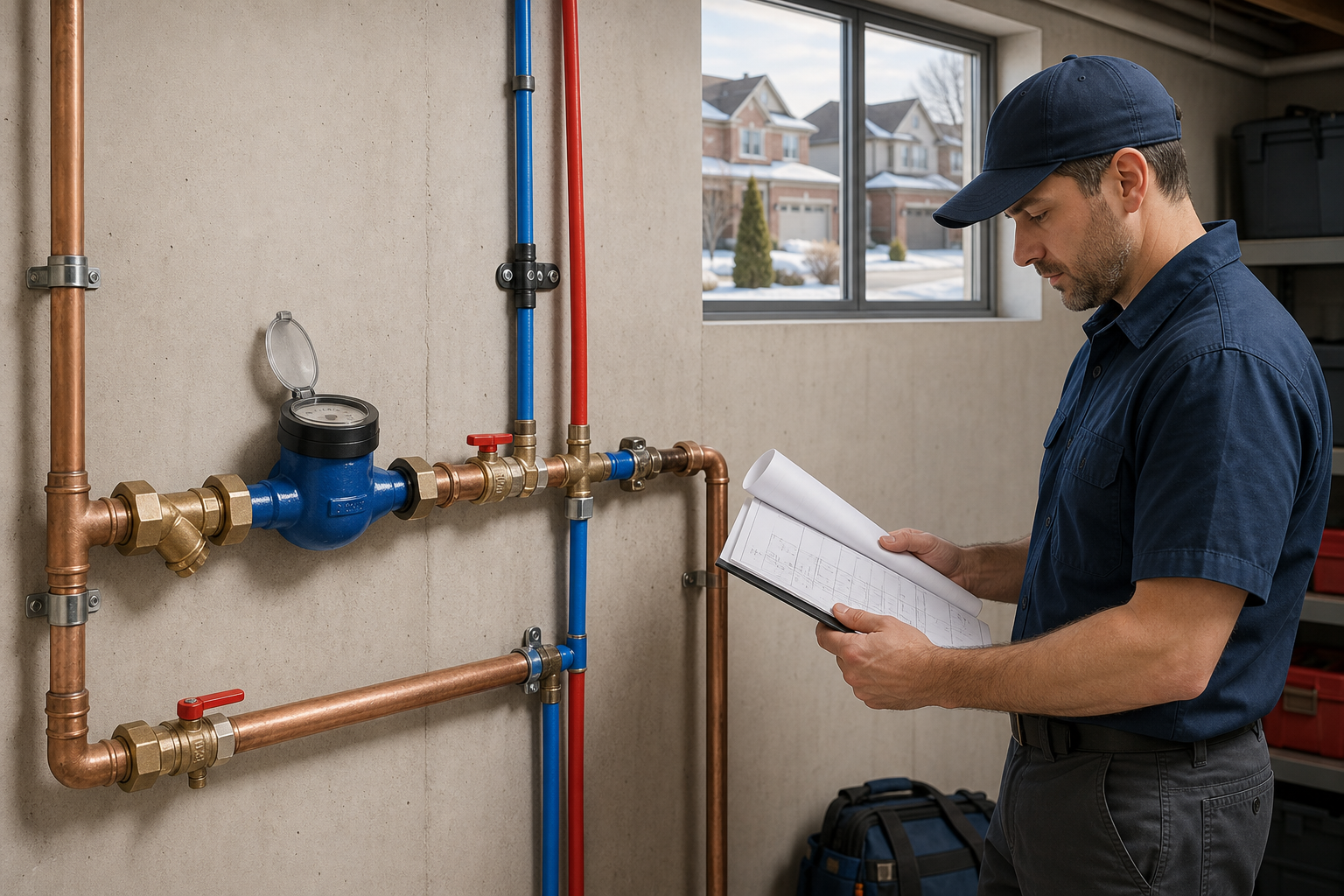
On the scheduled date, the residence must be accessible and the necessary plumbing must be complete. The City also requires enough space for the meter and read-out device.
Before the appointment, confirm that:
- The meter location is accessible and is not blocked by drywall, cabinetry, stored materials or other trades’ equipment.
- The private piping is complete and matches the approved project information.
- Shutoff valves and fittings can be reached for installation and future service.
- The meter and read-out device have the clearance required for the approved arrangement.
- Someone authorized to provide access will be present or has made reliable access arrangements.
- Any wall or ceiling openings needed for the plumbing work have been planned and protected.
The City states that a final Occupancy Permit will not be issued without a water meter. For new construction, include the meter application, payment, scheduling and readiness inspection in the build schedule.
What does the plumber handle?
The exact division of work depends on the project contract. In general, the City controls its application requirements and approval process, while the owner or builder must provide project information, payment and access. A plumbing contractor may help inspect the existing arrangement, prepare private-side piping, coordinate technical information, make the area ready and communicate with the City on the owner’s behalf if authorized.
Get these points in writing:
- Who submits the application and who is responsible for the owner notification
- Who supplies the City-approved meter and who pays the municipal charge
- Which private valves, fittings, piping and access work are included
- Who contacts the City for scheduling
- What happens if the installation cannot proceed because the area is not ready
- Whether a separate plumbing permit or inspection applies to private-side alterations
Permit and inspection requirements can depend on the scope and the authority having jurisdiction. Confirm them for the specific work instead of relying on a generic checklist.
What if the existing meter area is too small?
In an older home, the meter area may have restricted access, deteriorated shutoff valves, damaged fittings or finished surfaces that prevent the required plumbing work. In that situation, the municipal appointment may need to be coordinated with private plumbing repairs.
A pre-installation assessment can identify whether the project may involve:
- Replacing or relocating private shutoff valves
- Rebuilding a short section of water-service piping
- Improving access around the meter location
- Repairing a leak or damaged fitting
- Opening and restoring a finished wall or ceiling
- Coordinating a temporary water shutoff and service restoration
Do not remove a City-issued meter or interfere with sealed components without confirming the correct procedure with Vaughan. If it is unclear whether the problem is the meter or the surrounding private plumbing, contact the City and arrange a qualified plumbing assessment before the scheduled date.
Questions to ask before hiring for a meter upgrade
- Will you inspect the existing meter location before the application or installation date?
- Will you submit the City application, or will I submit it through the City’s online process?
- What flow information and site-servicing drawings are required for this project?
- What private-side plumbing work is included in the quote?
- Who pays the City’s approved meter charge?
- Who schedules the installation with Vaughan?
- What happens if the meter area is not ready on the appointment date?
- Does the private plumbing alteration require a separate permit or inspection?
- Will water be shut off, and how will the property be protected during the work?
How Perruzza Plumbing can help with the plumbing scope
Perruzza Plumbing’s water-meter application and upgrade service is the relevant starting point for discussing municipal coordination and meter-related plumbing work in Vaughan and the GTA. If the meter must be coordinated with a new build, the company’s custom-home plumbing rough-in service may also be relevant.
For a project-specific assessment, use the Perruzza Plumbing quote request or call 647-919-9619. Include the property location, project type, current meter condition, planned changes and any occupancy or construction deadline.
Bottom line
A Vaughan water meter upgrade is easiest to manage when the municipal application and private plumbing scope are scheduled together. Confirm the current City procedure, provide accurate flow information, wait for approval before payment, schedule the appointment with Vaughan and have the residence, plumbing and meter space ready. If the existing area is tight or outdated, arrange an inspection before booking the installation.
This article is general information, not a substitute for current City instructions or project-specific plumbing advice. Municipal requirements, fees and procedures may change.